Why Robotics and AI Kits Are Becoming Essential in Modern Schools
Technology is evolving faster than ever before. Every year, new innovations reshape industries, communication, and the way people work. To prepare students for this rapidly changing world, schools must move beyond traditional teaching methods and introduce learning experiences that build creativity, problem-solving, and practical skills.
This is exactly why Robotics and Artificial Intelligence education is becoming such an important part of modern classrooms.
Through Robotics, AI, and STEM learning programs, students are not only introduced to technology but are also encouraged to become innovators, critical thinkers, and responsible problem-solvers.

Moving Beyond Memorization Toward Practical Learning
For many years, education focused mainly on memorizing facts, formulas, and textbook definitions.
But today’s world values much more than memory. Students now need creativity, analytical thinking, adaptability, and the ability to solve real-world problems.
Robotics and AI education help bring these skills into the classroom.
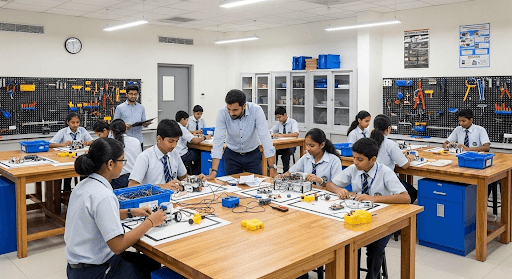
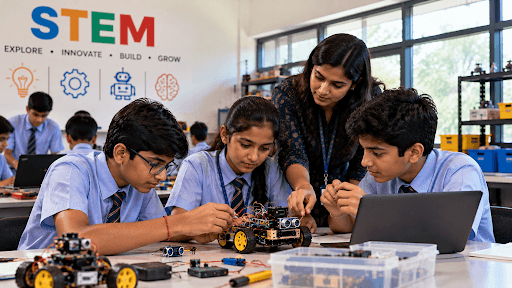
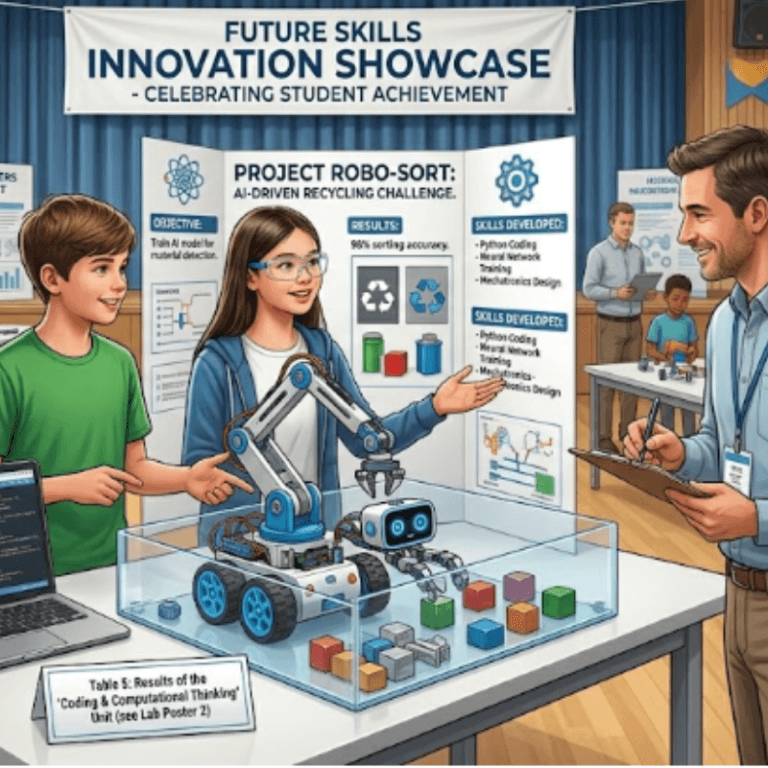
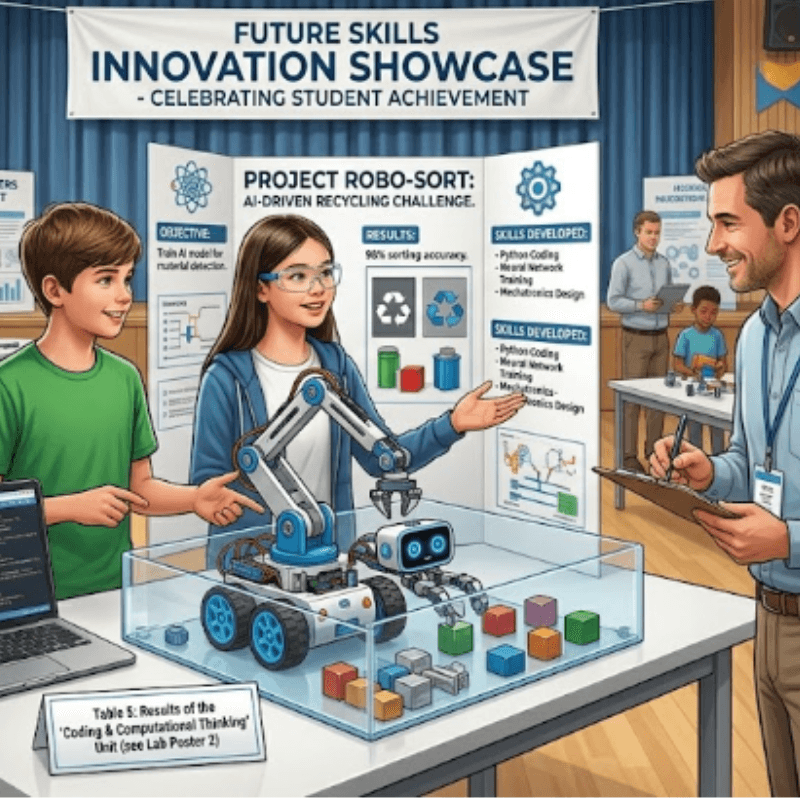
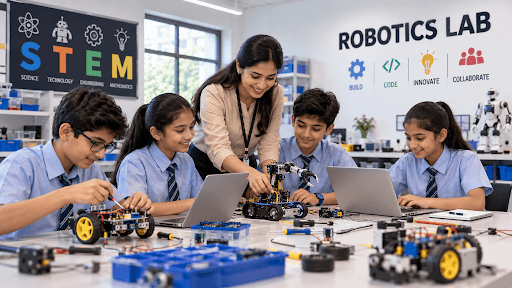
When students build a robot, create an automation project, or code a smart system, they are not simply learning science or programming concepts. They are learning how to think logically, test ideas, work in teams, and improve solutions through experimentation.
The learning process becomes much more engaging when students begin asking questions like:
- “How can I improve this project?”
- “Why isn’t the robot responding correctly?”
- “Can there be a smarter solution?”
This type of hands-on education encourages curiosity, innovation, and independent thinking.
What Do Robotics and AI Kits Include?
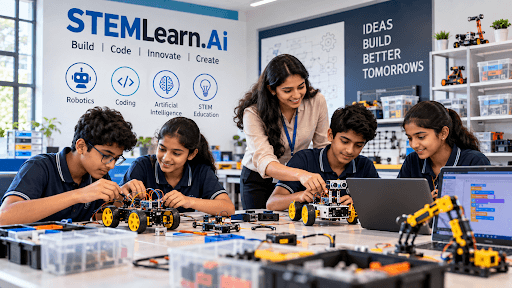
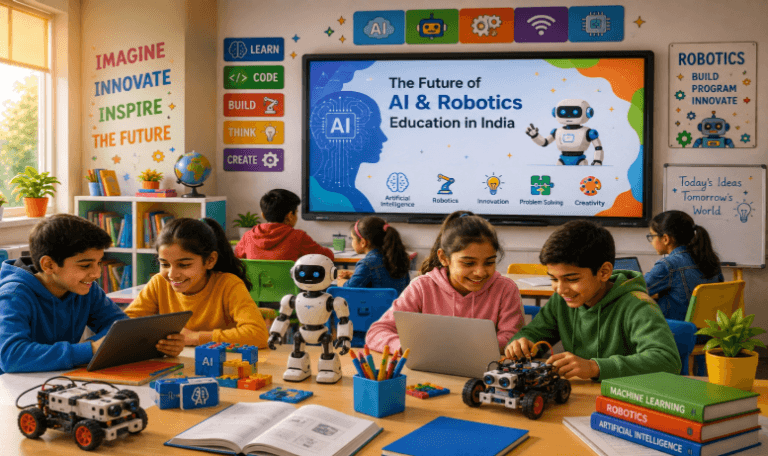
Modern Robotics and AI kits are designed to make technology learning simple, interactive, and enjoyable for students of different age groups.
These kits typically include:
- Motors and wheels for movement
- Sensors that detect light, sound, distance, or touch
- Controllers and microprocessors
- Coding platforms using block coding or programming languages
- Electronic components for building projects
The activities are usually aligned with educational frameworks and modern learning policies such as NEP 2020, helping students connect classroom concepts with practical applications.
Students are able to see their ideas come to life through movement, automation, and intelligent responses, making learning more meaningful and exciting.
Why Schools Need Robotics and AI Kits
One of the biggest challenges schools face today is maintaining student engagement in classrooms.
Traditional teaching methods sometimes make subjects feel difficult or disconnected from real life. Robotics and STEM education solve this problem by introducing hands-on learning experiences.
Instead of only reading theories from textbooks, students actively build, experiment, and discover concepts themselves.
For example, students can:
- Program robots to follow paths
- Create obstacle-avoiding systems
- Build smart lighting projects
- Design automation models
Most robotics projects are team-based, which naturally improves communication, collaboration, and decision-making skills.
Students also begin applying design thinking principles by connecting theoretical concepts with practical situations.
Developing 21st Century Skills
Robotics and AI education help students build the essential skills needed for future careers and real-world challenges.
These include the well-known 4Cs of 21st-century learning:
Critical Thinking
Students learn how to analyze problems, test solutions, and make logical decisions.
Creativity
Children are encouraged to design new ideas, invent projects, and think beyond standard solutions.
Collaboration
Group activities help students work together, share ideas, and build stronger teamwork skills.
Communication
Students learn to explain ideas, discuss challenges, and present solutions effectively.
These skills are valuable not only inside classrooms but throughout life.
Turning Curiosity Into Innovation
Children are naturally curious.
They constantly ask questions about how things work, why machines move, and how technology functions.
Robotics and AI education transform this curiosity into innovation.
Instead of simply using technology, students begin understanding how technology is created. They start designing solutions, building systems, and experimenting with ideas.
This creates a mindset where students are encouraged to think like creators rather than passive users.
Learning for Every Age Group
One of the best aspects of Robotics and AI education is that it can be introduced at different learning levels.
Primary School Students
Young learners are introduced to simple concepts such as motion, sequencing, logic, and cause-and-effect relationships.
Using colorful components and visual coding platforms, they can build fun projects like moving vehicles, windmills, or simple machines.
Middle School Students
Students begin exploring sensors, circuits, and automation.
Projects may include:
- Obstacle detection systems
- Smart lighting projects
- Voice-controlled robots
- Automated traffic models
High School Students
At higher levels, students work with advanced technologies such as Artificial Intelligence, IoT, and automation systems.
They may create projects like:
- Smart home systems
- Disaster alert systems
- Automated security systems
- AI-based applications
This gradual progression helps students continuously improve their confidence, creativity, and technical understanding.
Making Quality Education More Accessible
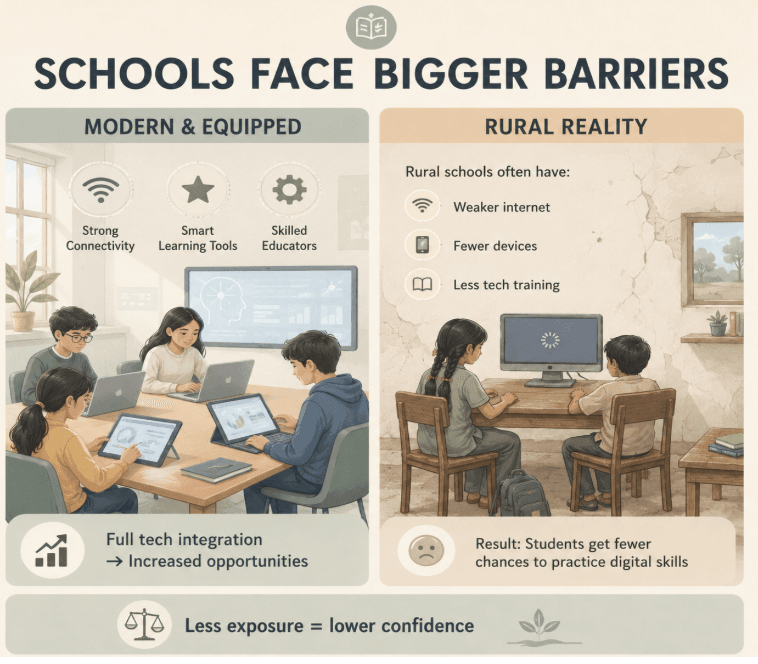
One of the most positive changes in modern education is that Robotics and AI learning are becoming accessible beyond major metropolitan cities.
With initiatives such as ATL labs, CSR programs, and digital education missions, schools in tier-2 and tier-3 cities are also adopting STEM and robotics education.
This is helping reduce the educational gap and ensuring that more students have access to future-focused learning opportunities.
Technology education is no longer limited to a few privileged institutions.
Robotics and AI Are Not Only for Future Engineers
A common misconception is that Robotics and AI are only useful for students interested in technical careers.
In reality, these subjects combine creativity, design, communication, logic, and innovation — making them valuable for every student.
For example:
- Students interested in art can design robot models and interfaces
- Students interested in business can explore automation solutions
- Students passionate about social causes can build projects that solve community problems
- Creative thinkers can combine storytelling with technology projects
Robotics education teaches students that technology is not only about machines — it is about improving everyday life.
Preparing Students for the Future
The future job market will require more than academic knowledge.
Students will need:
- Problem-solving skills
- Technological understanding
- Creativity and innovation
- Communication and teamwork abilities
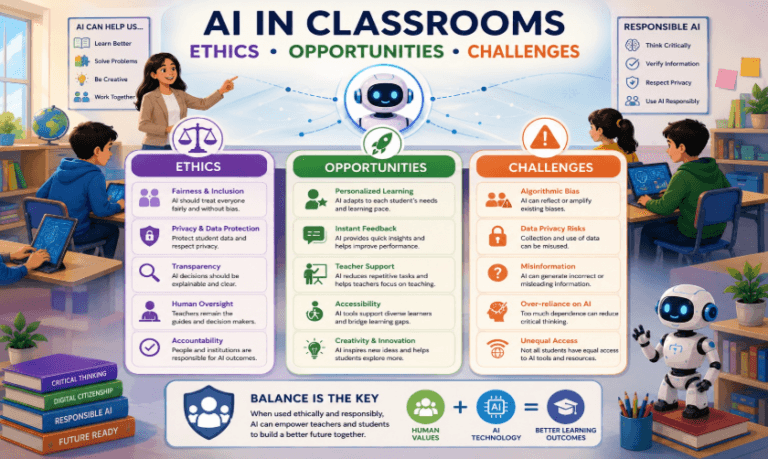
- Ethical and responsible thinking
When students learn Robotics and AI, they begin understanding how technology works instead of simply consuming it.
They learn how to design systems, create solutions, and think critically about the impact of technology on society.
This helps build a generation that is not only technologically skilled but also socially responsible.
Creating Innovators Through STEM Education
The goal of modern STEM education is not simply to teach students how to use technology.
The real goal is to help students become innovators, creators, and confident thinkers.
Every child should have the opportunity to explore their imagination, experiment with ideas, and discover their potential.
Robotics and AI kits make this possible by transforming curiosity into creativity and creativity into innovation.
The Future of Education Starts Now
Education is no longer limited to textbooks and memorization.
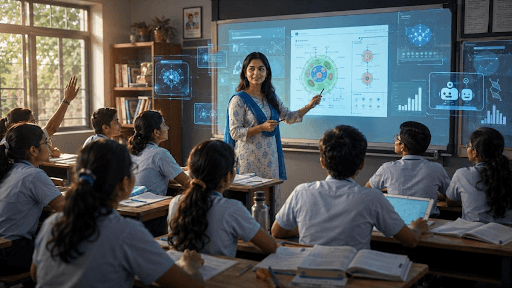
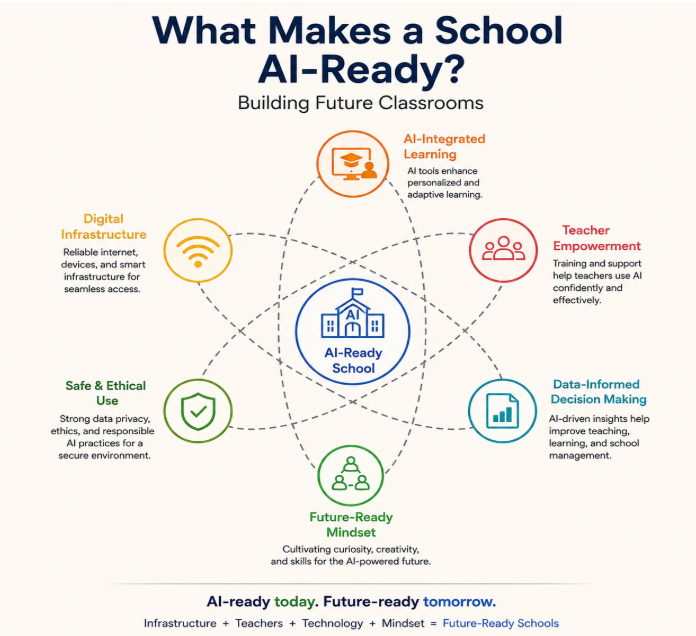
Today’s classrooms must prepare students for a world shaped by Artificial Intelligence, automation, and emerging technologies.
By introducing Robotics and AI into school learning environments, schools are not only teaching technical knowledge but also helping students develop the skills required for future success.
These programs create learners who are curious, creative, collaborative, and ready to solve real-world challenges.
The schools that embrace Robotics, AI, and STEM education today will help shape the innovators and leaders of tomorrow.
Categories
Recent Post