Project-Based Learning vs Traditional Learning: What Works Best for STEM Education?

Education is evolving as schools look for ways to help students move beyond memorising information and develop practical problem-solving skills.

Project-Based Learning vs Traditional Learning

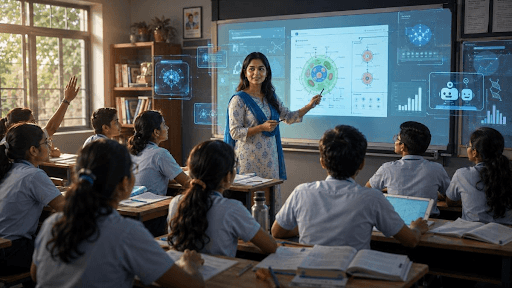
Traditional learning helps students understand concepts through structured lessons, explanations, and exercises. Project-based learning allows them to apply those concepts through experiments, projects, and real-world challenges.

In Science, Technology, Engineering, and Mathematics (STEM), both approaches can play an important role. The key is understanding how to combine them to create meaningful learning experiences.

1. What Is Traditional Learning?

Traditional learning generally involves teacher-led instruction, textbooks, classroom discussions, written exercises, and examinations.

For example, a teacher explaining electrical circuits may introduce voltage, current, and resistance before asking students to solve related questions.

Benefits of traditional learning include:

  • Building foundational knowledge.
  • Providing structured explanations of complex concepts.
  • Helping teachers cover curriculum objectives.
  • Assessing understanding through tests and assignments.


This approach is valuable when students need a strong theoretical foundation before attempting practical activities.

2. What Is Project-Based Learning?

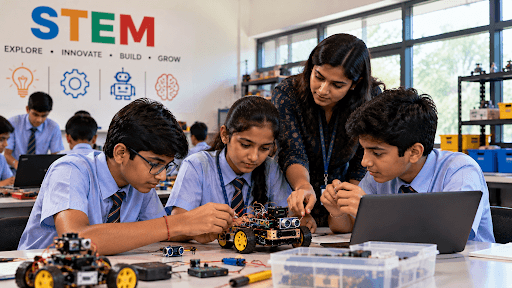
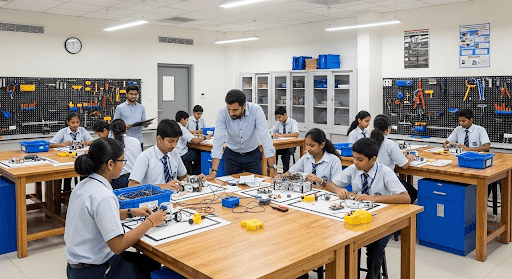
Project-based learning allows students to investigate a question or problem and apply their knowledge to develop a solution.For example, students learning about environmental conservation might build a smart irrigation model using a soil moisture sensor.Through the project, they explore sensors, programming, electronics, and water management while testing their ideas.Benefits of project-based learning include:
  • Encouraging practical problem-solving.
  • Developing creativity and critical thinking.
  • Promoting teamwork and communication.
  • Connecting theoretical concepts with real-world applications.
  • Giving students opportunities to experiment and improve their designs.

Successful project-based learning requires clear objectives, teacher guidance, and appropriate assessment.

3. Key Differences Between the Two Approaches

Traditional Learning

Project-Based Learning

Focuses on explaining concepts

Focuses on applying concepts

Uses lessons and exercises

Uses projects and experiments

Often follows structured instructions

Encourages investigation and design

Assesses knowledge through tests and assignments

Assesses projects, explanations, and practical skills

Builds foundational understanding

Connects knowledge with practical challenges

Neither method is automatically better in every situation. Their effectiveness depends on the subject, learning objectives, and students’ needs.

4. Examples of Project-Based Learning in STEM

Schools can introduce practical activities that help students apply what they learn.

Automatic Night Lamp: Students use a light sensor to control an LED and understand inputs, outputs, and basic electronics.

Obstacle-Avoiding Robot: Students combine distance sensors, motors, and programming logic to build a robot that responds to obstacles.

Smart Irrigation System: Students use soil moisture readings to demonstrate how automation can support water management.

Line-Following Robot: Students explore sensors, movement, and programming by building a robot that follows a marked path.

These activities help students understand how science, engineering, mathematics, and coding work together.

5. Why Schools Should Combine Both Methods

The most practical approach is often to combine structured teaching with hands-on activities.

Teachers can first explain a concept, demonstrate the relevant equipment, and guide students through a basic experiment. Students can then apply their understanding to a project or design challenge.

For example, after learning how a light sensor works, students can build an automatic night lamp and experiment with different lighting conditions.

This approach gives students both the theoretical foundation and the opportunity to apply their knowledge.

6. How to Measure Student Learning

Schools should evaluate more than whether a project works.

Teachers can assess:

  • Understanding of key concepts.
  • Problem-solving and troubleshooting.
  • Practical skills and experimentation.
  • Teamwork and communication.
  • Ability to explain design decisions.
  • Improvements made after testing.

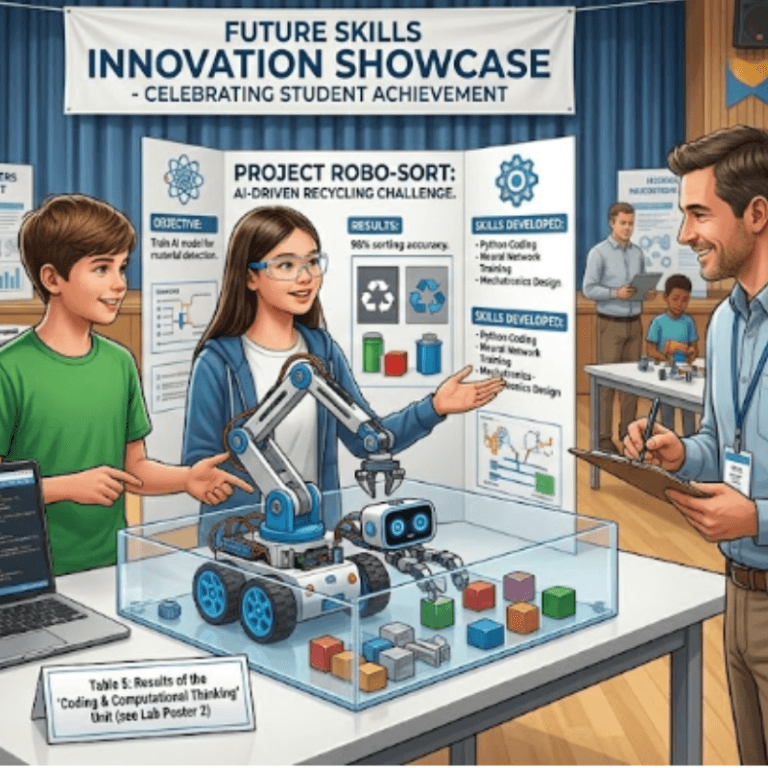
Project demonstrations, assessment rubrics, worksheets, and student presentations can help teachers measure progress.

Conclusion

Traditional learning builds foundational knowledge, while project-based learning gives students opportunities to apply that knowledge to practical challenges.

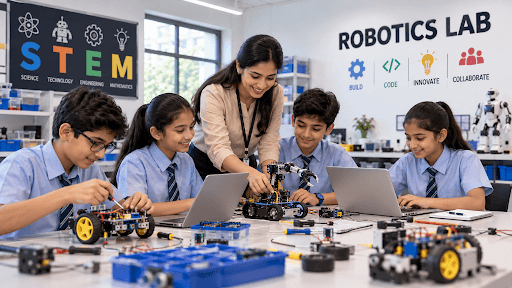
By combining structured instruction with robotics, coding, experiments, and engineering projects, schools can create engaging STEM learning experiences that encourage curiosity, creativity, and problem-solving.

The goal is not simply to complete projects, but to help students understand concepts and use them to develop solutions.

Bring Hands-On STEM Learning to Your School With STEMLearn.AI

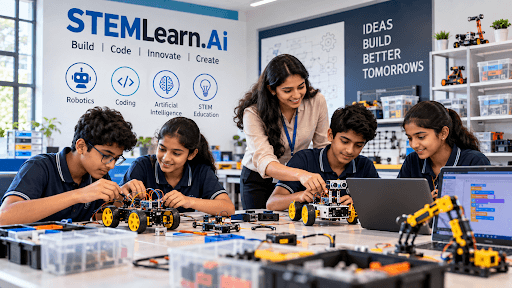
STEMLearn.AI supports schools in introducing practical learning experiences through robotics, coding, Artificial Intelligence, and STEM education.

Through structured learning activities and hands-on projects, students can explore emerging technologies and develop skills that help them understand and solve real-world problems.

Interested in introducing hands-on STEM education at your school? Explore STEMLearn.AI’s educational programs and learning solutions.

Categories

Recent Post

Impact of STEM and Robotics Programs
How Schools Can Measure the Impact of STEM and Robotics Program
Project-Based Learning vs Traditional Learning
Project-Based Learning vs Traditional Learning: What Works Best for STEM Education?
Without Prior Coding Experience
How Teachers Can Introduce Artificial Intelligence Without Prior Coding Experience
Identify
Identify Your School's Learning Objectives

Register Your Interest