Bridging the Rural-Urban Education Gap: The Role of AI
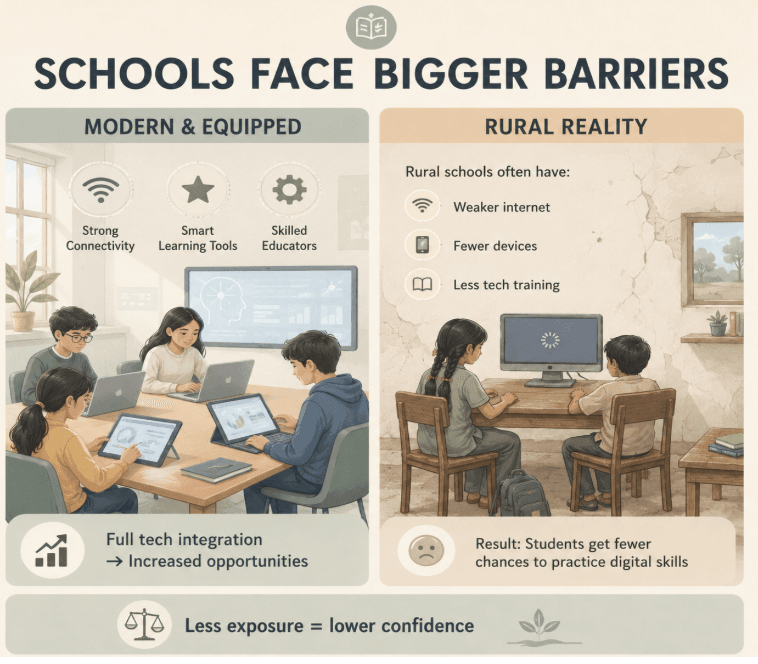
Education is known as one of the most powerful tools for economic and social development. But even after significant progress over the years, differences between rural and urban education persist in many parts of the world, including India. Urban schools generally benefit from good infrastructure, experienced teachers, exposure to emerging technologies and access to digital learning resources. However, many rural schools still face challenges such as teacher shortages, limited access to quality study material, inadequate lab facilities, and unreliable internet connectivity. These inequalities limit learning opportunities and create barriers to students’ academic and future success.
According to Google for Education, the world will need around 44 million additional teachers by 2030 to achieve universal primary and secondary education. Teacher shortages are often most severe in underserved and rural communities, making it essential to explore innovative approaches that can support educators and improve access to quality learning.
Artificial Intelligence (AI) is a promising technology that can help reduce these educational disparities. Instead of replacing teachers or traditional classrooms, AI has the potential to enhance and complement the existing education system by providing a personalised learning experience, improving access to quality educational resources and supporting educators in reaching students regardless of their location. If implemented responsibly, AI can become an important step in making quality education more equitable and accessible
Understanding the Rural-Urban Education Gap
The differences between education in rural and urban schools go beyond school infrastructure. Urban students generally have better access to advanced STEM laboratories, experienced specialist teachers, more extracurricular activities, and career counselling to plan for the future. In contrast, many rural schools lack all these facilities. They often have fewer specialised teachers and restricted access to modern educational resources.
The differences directly impact learning outcomes. In many rural schools, a single teacher may be responsible for teaching multiple subjects or even multiple grades at the same time, making it extremely difficult to provide personalised attention to students. This impacts the students who require additional support, as they may not receive timely attention, while quick advanced learners are also not sufficiently challenged
India’s National Education Policy (NEP) 2020 recognises technology as an important enabler for improving education quality and ensuring equal access. This policy encourages responsible integration of technologies such as Artificial Intelligence into education to create more interactive learning environments and prepare students for a rapidly evolving digital economy.
Recognising these disparities, UNESCO continues to emphasise that digital technologies and AI should be implemented in ways that promote inclusion and reduce educational inequalities rather than widen them.
How Artificial Intelligence Can Bridge the Gap
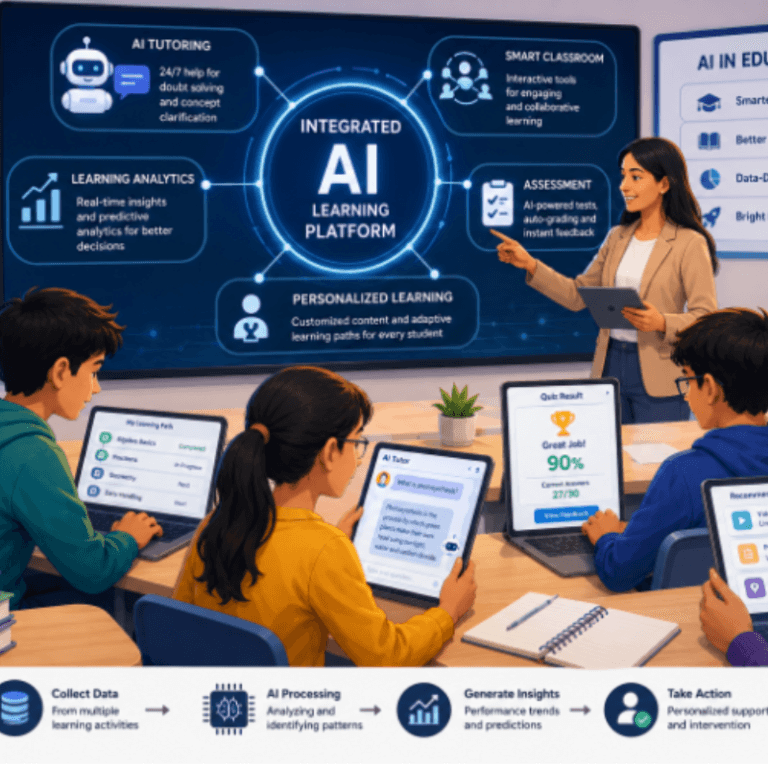
Artificial intelligence provides solutions that address many long-standing educational challenges simultaneously. Unlike conventional digital learning platforms that provide the same content for all learners, AI-powered systems continuously analyse student interaction and adapt the content according to each student’s needs.
One of the greatest strengths of AI is adaptive learning. These AI systems use machine learning algorithms to analyse students’ answers, identify areas where they struggle, and adjust the lesson’s difficulty accordingly. Over time, these algorithms recognise learning patterns and refine content recommendations, making the learning experience personalised for every student.
For example, if a student repeatedly struggles with algebra, the AI system automatically identifies the learning gap. It provides additional explanations, practice exercises, and visual demonstrations for the topic before introducing more advanced topics. On the other hand, students who learn the topic quickly can progress without unnecessary repetition.
This approach is most valuable in classes where teachers manage a large number of students with different learning abilities. But it should not replace teachers; it should be integrated into classrooms with teacher supervision. Teacher supervision remains essential to ensure responsible AI use and meaningful human interaction in the learning process.
Breaking Language Barriers with Natural Language Processing
India is home to hundreds of languages and dialects, making language accessibility an important factor in education. AI systems powered by Natural Language Processing (NLP) can understand, translate and generate human language, allowing content to be delivered in multiple languages.
Students can study and ask questions in their preferred language and receive explanations that are much easier to understand for them. This will help in reducing language barriers while making quality education accessible to a much larger population of students.
AI-Powered Learning Analytics
Another useful application of AI is learning analytics. Every interaction between a student and an AI-based learning platform generates valuable data such as quiz performance, learning speed, common mistakes and engagement levels. By analysing this data, AI can identify students who are falling behind and alert teachers before learning gaps become severe. Instead of relying only on traditional periodic examinations, teachers receive timely insights about student progress so that they can intervene on time.
Supporting Teachers Rather Than Replacing Them
A common misconception about AI is that it will replace teachers. In reality, AI is most effective and reliable when used as an educational assistant, not an actual teacher.
AI can automate time-consuming tasks for teachers such as grading objective assessments, generating lesson plans, organising study material, and monitoring student progress. By helping teachers reduce administrative workload, AI allows teachers to dedicate more time to classroom discussions, mentoring students, and personalised support. This approach is also reflected in UNESCO’s AI Competency Framework for Teachers, which emphasises that AI should strengthen teachers’ professional practice while preserving human judgement, ethics and meaningful classroom interaction.
Expanding Access to Practical Learning
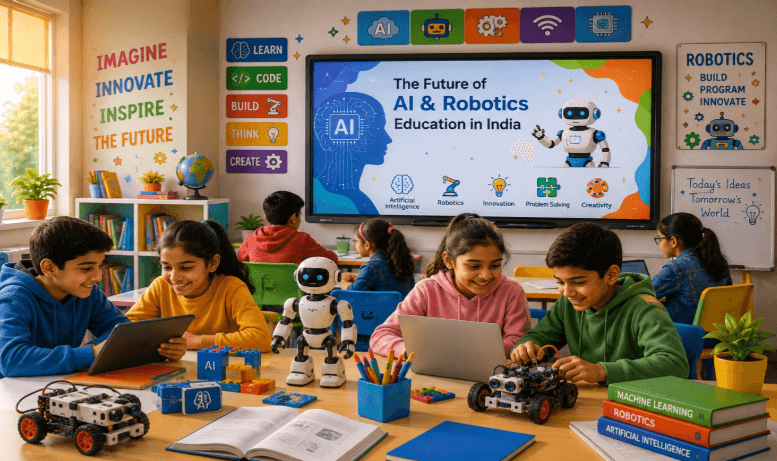
Access to well-equipped science laboratories and robotics facilities remains uneven across schools. AI-powered virtual laboratories and online simulations can help reduce this gap by allowing students to conduct these experiments digitally and practice technical skills without requiring physical infrastructure. While virtual experiences cannot completely replace real-life hands-on laboratory work, they provide valuable learning support and opportunities to students in areas where resources are limited and can visibly enhance conceptual understanding.
Challenges That Must Be Addressed
Even though AI has immense potential, it is not the only solution to educational inequality. Successful implementation depends on various supporting factors.
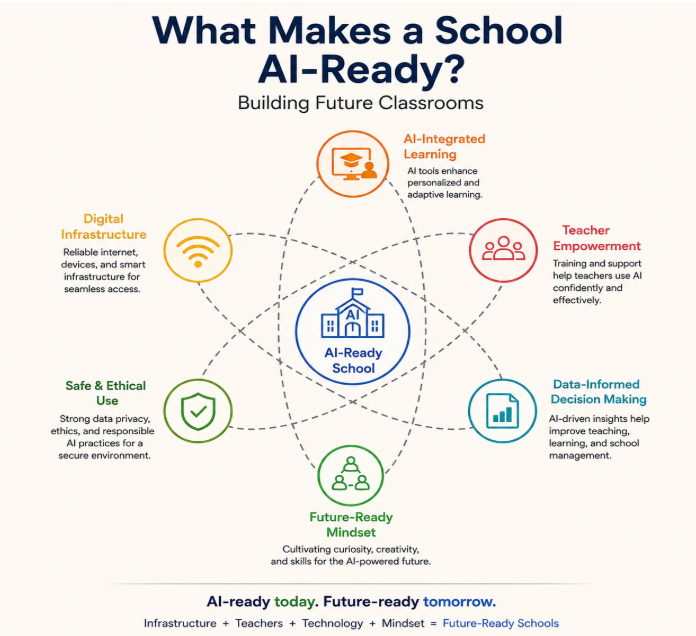
Reliable internet connectivity, access to affordable digital devices, consistent electricity, and teacher training remain essential prerequisites for successful AI implementation. Without these necessities, the benefits of AI may remain limited in schools that lack these resources and benefit only well-resourced schools, unintentionally widening the educational divide.
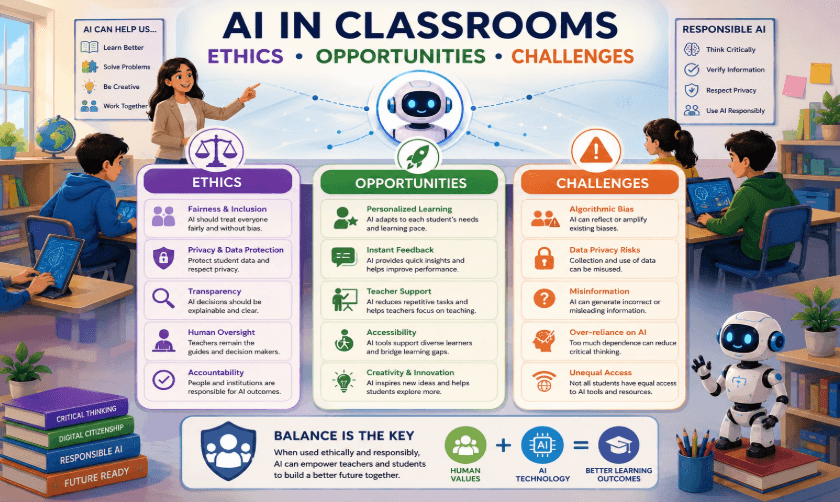
Other equally important issues are data privacy, cybersecurity, algorithmic bias, and transparency. Educational AI systems often process sensitive student information, making responsible data governance and ethical AI practices essential. UNESCO’s guidance on AI in education emphasises that technology should always respect human rights, promote inclusion and support equitable learning for all students.
Conclusion
Bridging the rural-urban education gap requires more than technological innovation. It requires planned and thoughtful implementation. Artificial intelligence should be seen as a medium that complements teachers, strengthens existing educational systems, and expands learning opportunities for students regardless of where they live.
India’s vision as outlined in the National Education Policy 2020, combined with sustained investments in digital infrastructure, teacher training, and responsible AI adoption, will build a strong foundation for this technological transformation. As AI continues to evolve, it has the potential to make quality education more personalised, accessible and inclusive for every student, ensuring every student can reach their full potential.
The success of AI in education will not be measured by how advanced technology becomes, but by how effectively it ensures that every student’s future is shaped by their abilities and aspirations, not by where they live.
Categories
Recent Post