AI in Classrooms: Ethics, Opportunities, & Challenges
Just a few years ago, the idea of instantly receiving answers to our queries, such as complex questions, essay outlines, writing professional emails, lesson planning for teachers, a recipe, and debugging code with the help of a machine seemed like something from the far future. Today, it has become an everyday reality through Artificial Intelligence (AI).
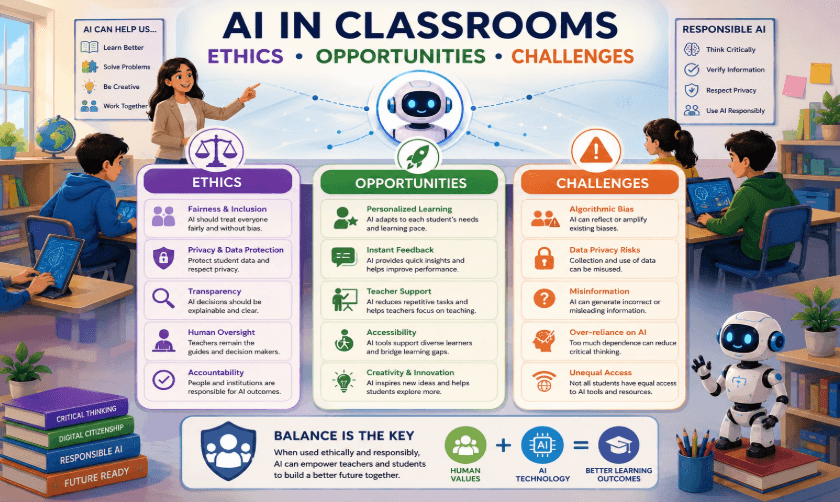
In classrooms, AI is no longer an emerging concept—it is gradually becoming part of everyday teaching and learning. Over the past few years, AI has evolved from being taught as a classroom subject to a technology that actively shapes how classrooms function. Schools are increasingly using AI to personalise learning, automate routine administrative tasks, support lesson planning and help teachers design learning experiences that better match students’ needs. Together, these developments have the potential to make learning more interactive, personalised and efficient. At the same time, AI-generated responses are not always accurate or up to date, making critical thinking and human judgement just as important as the technology itself.
However, these changes and the growing presence of AI in every domain, especially in education, raise important concerns. How much should students and educators rely on AI? Do these technologies help us make fair decisions? How will schools help to protect students’ data and promote healthy usage of AI? As AI becomes more deeply integrated into education, the question is no longer whether it belongs in classrooms but how it can be implemented ethically and effectively.
This shift is also reflected at the global policy level. In November 2021, all 193 UNESCO Member States unanimously adopted the Recommendation on the Ethics of Artificial Intelligence, the world’s first global standard on the ethical use of AI. Rather than viewing AI simply as a technological advancement, the framework emphasises that its development and use should be guided by principles such as transparency, accountability, human oversight and respect for human rights. For education, it reinforces an important message: adopting AI in classrooms should go hand in hand with responsible governance and thoughtful implementation.
Bringing New Opportunities in Learning
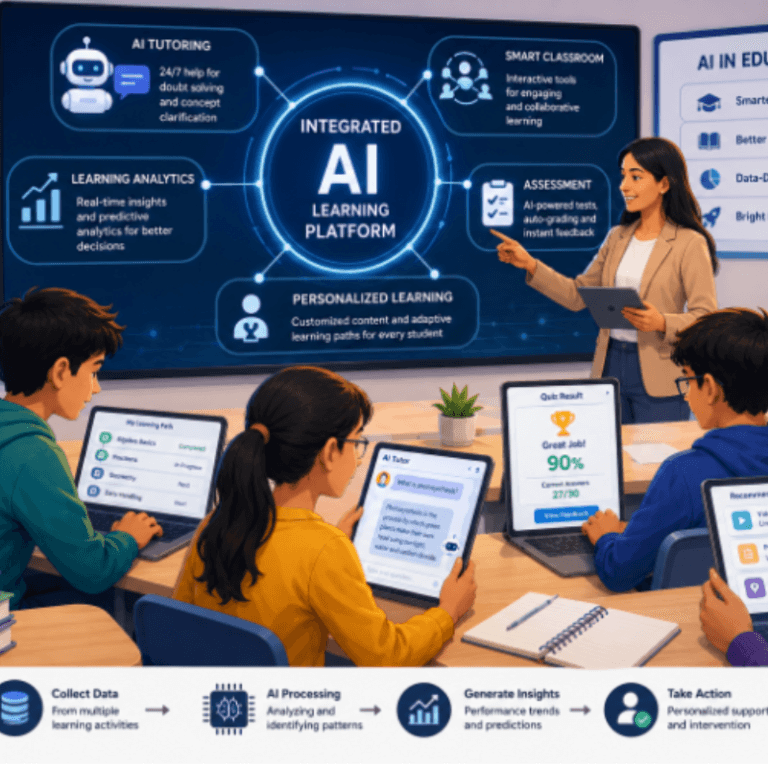
One of AI’s most significant contributions to education is personalised learning. Every student has a different learning style, pace, strengths, and challenges. UNESCO also identifies it as one of AI’s most promising applications, noting that intelligent systems can adapt learning experiences to individual students, identify learning gaps and provide timely support. This allows instruction to become more responsive than the traditional one-size-fits-all classroom approach. However, traditional classroom learning follows a standard teaching approach designed to meet the needs of an entire class rather than an individual student. AI-powered adaptive learning platforms can map a student’s progress, identify knowledge gaps, and then recommend customised learning. With this, students who lag receive extra support and practice, while fast learners can progress quickly without being held back.
Traditional classrooms are often designed to teach an entire class rather than respond to individual learning needs. A teacher with an average of thirty to thirty-five students cannot provide each student’s personalised feedback every time after every exam or assessment. For teachers, this means students receive support that is better aligned with their individual needs, while educators gain deeper insights into learning progress without having to analyse every assessment manually.
Teachers also stand to benefit from AI. Microsoft’s AI in Education Report (2025) found that educators are increasingly using AI to prepare lesson plans, generate classroom resources, create assessments and reduce routine administrative work. By automating repetitive tasks, AI allows teachers to spend less time on paperwork and more time supporting students through discussion, mentoring and personalised guidance. While these developments demonstrate AI’s potential to make learning more personalised and efficient, they also raise important questions about how these technologies should be designed, governed and used responsibly in educational settings.
Ethical Considerations That Cannot Be Ignored
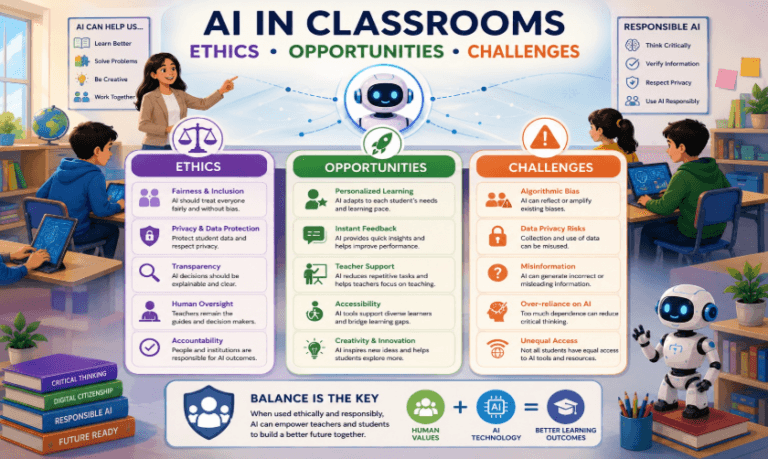
The benefits of AI are promising, but it is also important to keep ethical considerations in mind. One of the biggest concerns is student data privacy. AI systems depend on large amounts of data to learn from patterns and personalise the learning experience. Recognising these concerns, UNESCO’s Recommendation on the Ethics of Artificial Intelligence identifies data privacy, transparency and human oversight as core principles for trustworthy AI systems. It recommends that organisations that collect data, particularly in sensitive sectors such as education, establish clear governance frameworks to protect individual rights and ensure responsible use of information. Schools and technology providers should ensure that this data is safely stored and used responsibly, with clear policies that protect students from unauthorised access, misuse, and security breaches
Algorithmic bias is another challenge. All AI systems learn from data we provide to train them. So, if the data reflects existing educational or social biases, AI-generated recommendations may be unintentionally biased. They may unintentionally disadvantage certain groups of students. UNESCO further emphasises that AI systems should be regularly assessed for fairness and should not reinforce existing social or educational inequalities. In classrooms, this means AI should support equitable learning opportunities rather than unintentionally disadvantaging certain groups of students.
Academic integrity is also a growing concern amid the rise of generative AI tools. With generative AI tools, students can now generate essays, write code, and solve mathematical problems within seconds. While these tools support learning, when used responsibly and for brainstorming, research support, explaining concepts, or improving writing, they should not replace independent efforts, thinking, or personal original work. As a result, schools around the world are beginning to rethink how learning is assessed.
Instead of relying solely on assignments that AI can easily generate, educators are placing greater emphasis on discussions, presentations, collaborative projects and authentic problem-solving tasks that demonstrate genuine understanding.
The most important part is to recognise that AI should complement teachers’ work, not replace them. Teaching is much more than delivering information. It involves encouragement, empathy, emotional understanding, genuine human connection, mentorship and other qualities that technology can never replace. The role of educators will always remain important even if AI is enabled in classrooms.
In other words, AI is most effective when it complements professional judgement rather than replacing it. Technology can assist instruction, but qualities such as empathy, mentorship and ethical decision-making remain uniquely human responsibilities.
Challenges In Implementation
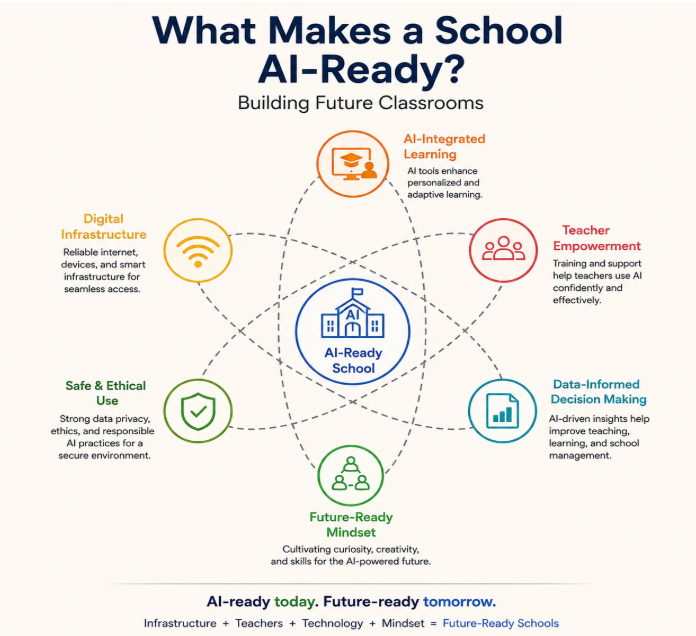
Successful integration of AI in classrooms requires much more than simply introducing new technology.
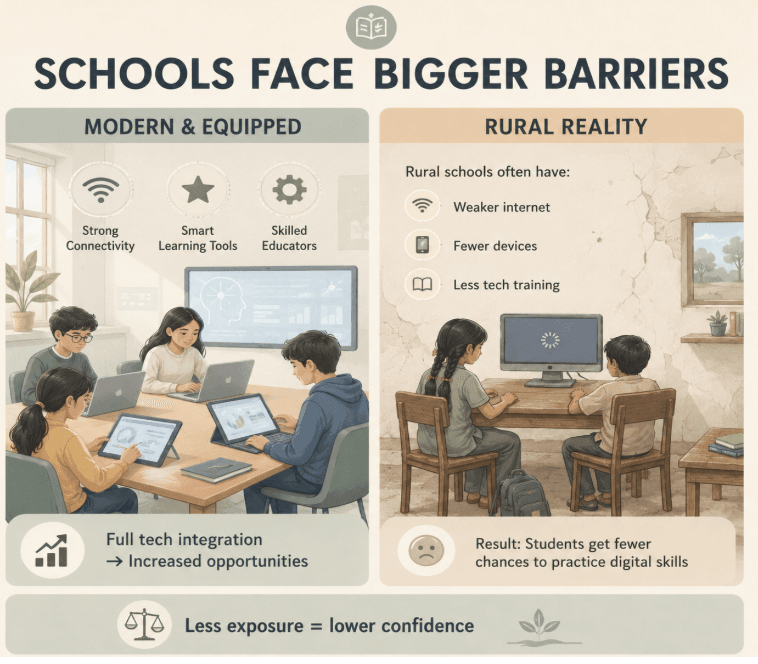
A major challenge in implementing AI is the digital divide. While AI has the potential to improve learning, its benefits cannot be realised without adequate digital infrastructure. This remains a significant challenge in many parts of the world, particularly in low-resource and rural settings. According to UNESCO, unequal access to digital technologies continues to limit equitable learning opportunities, making the digital divide one of the biggest barriers to inclusive AI-enabled education. Without reliable internet connectivity, suitable devices and basic digital infrastructure, AI risks widening existing educational inequalities rather than reducing them.
Teacher preparedness is equally important. Many teachers are still unfamiliar with AI-powered teaching tools, and many lack the confidence or training needed to integrate them effectively into classrooms. This challenge is not unique to India. Microsoft’s AI in Education Report found that 54% of global educators and 76% of global education leaders believe AI literacy should be an essential part of basic education for every student. This growing consensus highlights the need to equip both teachers and students with the knowledge and skills to use AI responsibly. The National Education Policy (NEP) 2020 emphasises continuous professional development for teachers and encourages the effective integration of technology into teaching and learning. Similarly, the National Curriculum Framework (NCF-SE 2023) highlights digital literacy and capacity building as essential for preparing teachers to use emerging technologies responsibly in classrooms.
Strong policies and governance frameworks are equally essential for the responsible implementation of AI in education. Schools and policymakers require clear guidelines on data protection, transparency, accountability, ethical standards, and responsible use of AI. Building trust among stakeholders such as parents, students, teachers, and educational institutions is equally important as developing the technology. These principles are also consistent with UNESCO’s ethical AI framework, which encourages governments and educational institutions to establish governance mechanisms that promote transparency, accountability and responsible innovation. Such policies not only protect learners but also build trust among parents, teachers and the wider education community.
Although these challenges are common across many countries, they also present an opportunity for nations to shape AI adoption according to their own educational priorities. In India’s case, recent policy reforms provide a strong foundation for integrating AI into school education responsibly and inclusively.
India’s Way Forward
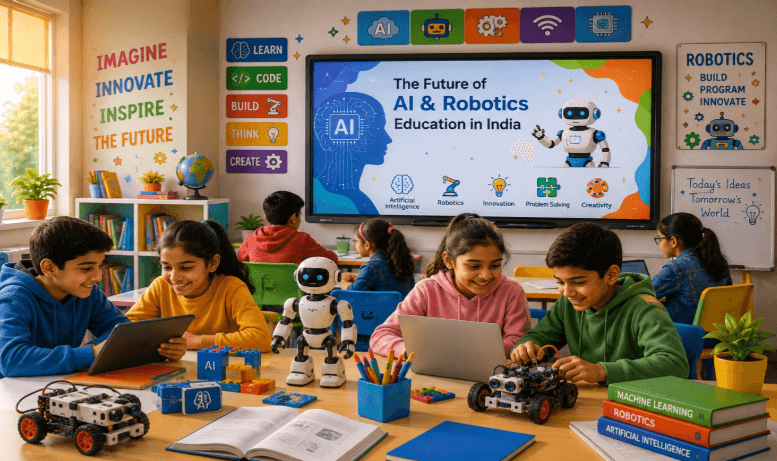
India has already begun laying the foundation for AI-enabled school education. The National Education Policy (NEP) 2020 encourages the meaningful integration of technology to improve teaching, learning and assessment while promoting critical thinking and problem-solving skills. This vision is already reflected in CBSE’s Computational Thinking and Artificial Intelligence (CT-AI) curriculum, which introduces students to computational thinking, AI concepts and the responsible use of emerging technologies from the school level. At the same time, successful implementation depends on more than policy alone. Sustained investment in digital infrastructure, teacher professional development and equitable access to technology will determine whether these initiatives benefit learners across both urban and rural schools. Without addressing these gaps, AI could reinforce existing inequalities instead of helping bridge them.
India has already begun laying the foundation for AI-enabled school education. The National Education Policy (NEP) 2020 encourages the meaningful integration of technology to improve teaching, learning and assessment while promoting critical thinking and problem-solving skills. This vision is already reflected in CBSE’s Computational Thinking and Artificial Intelligence (CT-AI) curriculum, which introduces students to computational thinking, AI concepts and the responsible use of emerging technologies from the school level. At the same time, successful implementation depends on more than policy alone. Sustained investment in digital infrastructure, teacher professional development and equitable access to technology will determine whether these initiatives benefit learners across both urban and rural schools. Without addressing these gaps, AI could reinforce existing inequalities instead of helping bridge them.
Artificial intelligence has the potential to make education more personalised, accessible and engaging.Technology alone cannot improve education. Its real impact will depend on thoughtful implementation, well-prepared teachers, strong ethical safeguards and equitable access for every learner. The future of education will not be shaped by how advanced AI becomes, but by how wisely schools, educators and policymakers choose to use it. When guided by responsible policies and human-centred values, AI can become a powerful partner in helping teachers inspire, support and prepare students for an increasingly digital world.
Categories
Recent Post