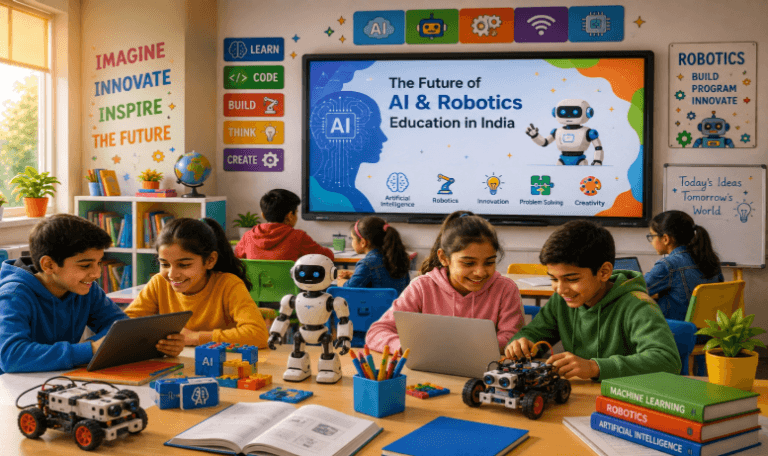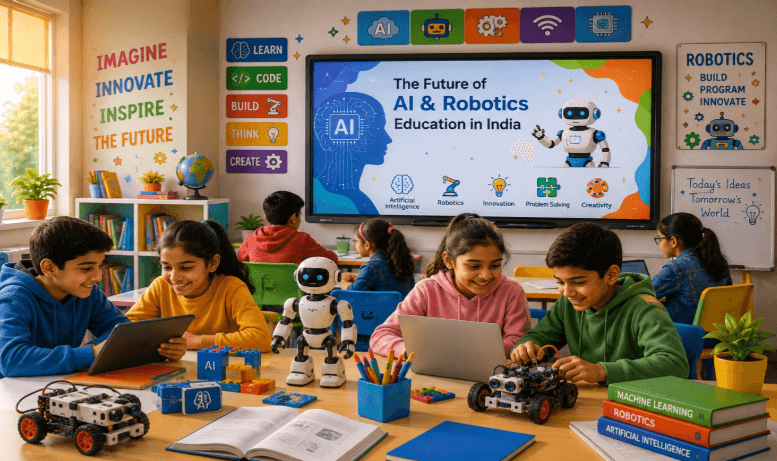
The Future of AI and Robotics Education in India
Artificial Intelligence (AI) and robotics are no longer technologies of the future — they have now become a part of our everyday lives. From healthcare and personalised banking to agriculture, manufacturing and education, AI and robotics are transforming industries and reshaping the skills expected from the next generation. According to the World Economic Forum’s Future of Jobs Report 2025, technological change is expected to transform a significant share of jobs over the coming years, increasing demand for AI, digital and analytical skills across industries. As the world moves forward and embraces this shift, it is time to evolve education too.

India is at an important stage in its educational transformation. With over 240 million students in schools and the introduction of the CBSE Computational Thinking and Artificial Intelligence (CT & AI) curriculum for Classes III–VIII from the 2026–27 academic session, the focus has shifted from whether AI and robotics should be introduced in classrooms to how they can be implemented effectively. The decisions we make in education today will play an important role in preparing students for an AI-driven future and strengthening India’s position in the global technology landscape.
India is home to one of the world’s largest student populations, presenting a significant opportunity to prepare learners for an increasingly technology-driven future. Initiatives such as the National Education Policy (NEP) 2020, the CBSE Computational Thinking and Artificial Intelligence curriculum, and the growing emphasis on STEM education reflect India’s efforts to build future-ready classrooms. AI and robotics are playing a central role in this transformation. However, this shift needs more than a new subject or curriculum. It requires a well-structured curriculum and learning framework and a fundamental shift in the way students learn, teachers teach, and schools approach innovation.
Why AI and Robotics Education Matters?
With the rapidly changing world, the skills students need are also evolving. The purpose of AI and robotics education goes beyond teaching students how to code or build machines. It is about helping them develop these future-appropriate skills so that they remain valuable in this rapidly changing world. Digital literacy, creative thinking, use of appropriate tools, problem-solving, and critical thinking are now equally important as traditional academic knowledge.
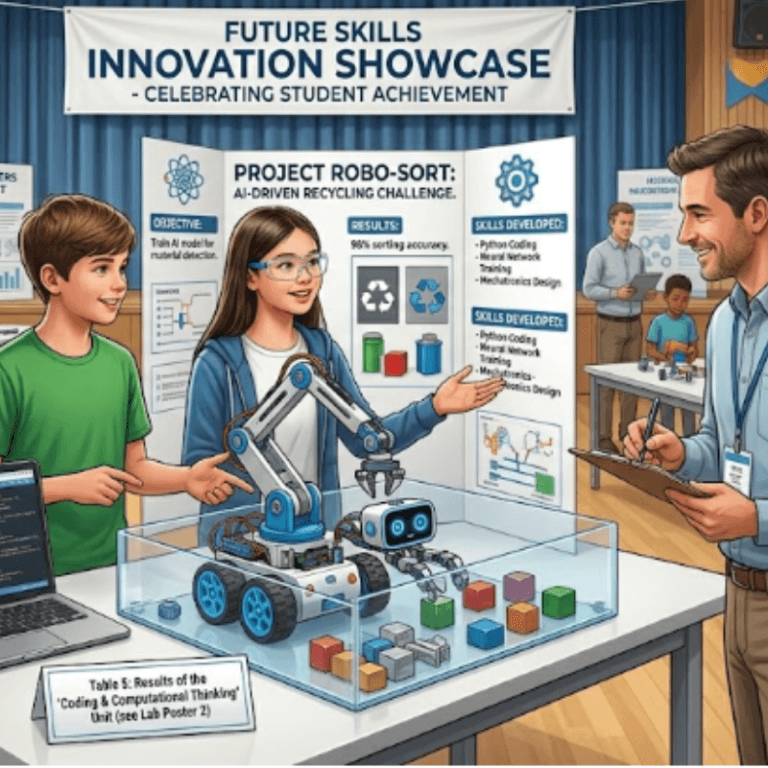
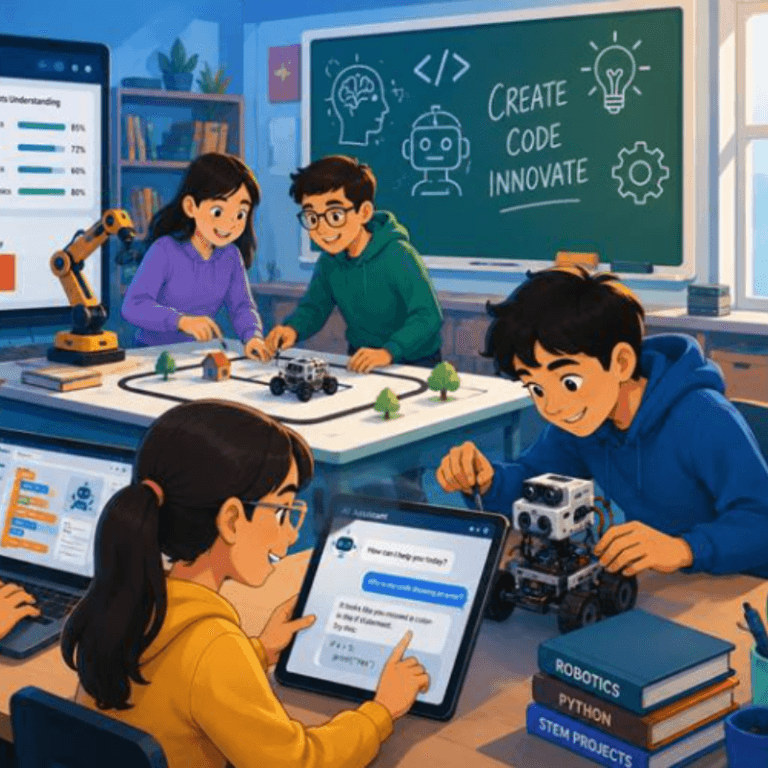
Robotics brings these concepts to life by allowing students to design, build and test solutions to real-world problems. Edtech platforms and STEM education providers are already supporting this educational approach. Instead of memorising them theoretically, students can implement them through hands-on projects and lab practices. AI supports this by allowing students to understand how intelligent systems analyse data, make decisions and solve complex problems.
Together, AI and robotics create a more engaging, practical and future-focused learning environment that encourages students to become creators of technology rather than merely consumers.
India’s Growing Focus on AI Education
India has already taken important steps toward integrating AI into school education. The National Education Policy 2020 aims to shift the focus of learning to skill-based and multidisciplinary education to make learning more practical and flexible. In line with this vision, CBSE introduced the Computational Thinking and Artificial Intelligence (CT-AI) curriculum from Grade 3 onwards, bringing AI into schools as a skill subject and expanding Computational Thinking Initiatives.
Beyond policy and curriculum reforms, there are other government initiatives and school innovation programs that encourage students to engage in various STEM learning initiatives through robotics, coding, Olympiads and design challenges. By combining theoretical concepts with practical application, these initiatives help students build a better foundation, creativity and confidence in working with emerging technologies.
The growing involvement of educational institutions, government departments and industry partners demonstrates that AI education is becoming an essential part of India’s long-term educational strategy. UNESCO’s AI Competency Framework for Teachers also highlights that preparing students for an AI-driven future requires parallel investment in teacher competencies and responsible AI integration.
Opportunities and Challenges
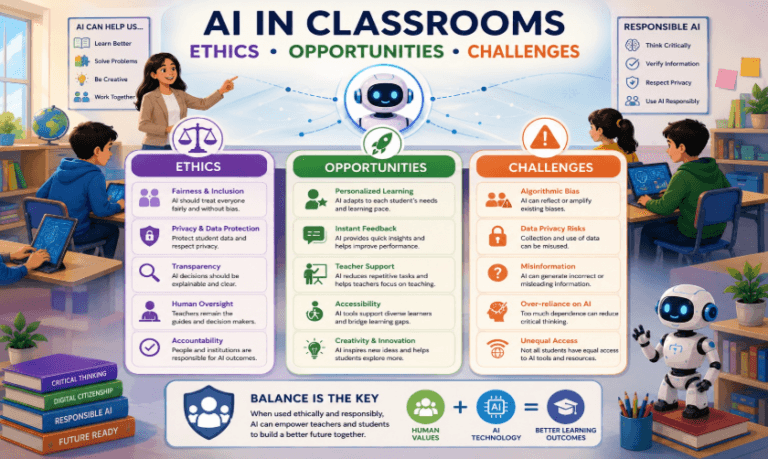
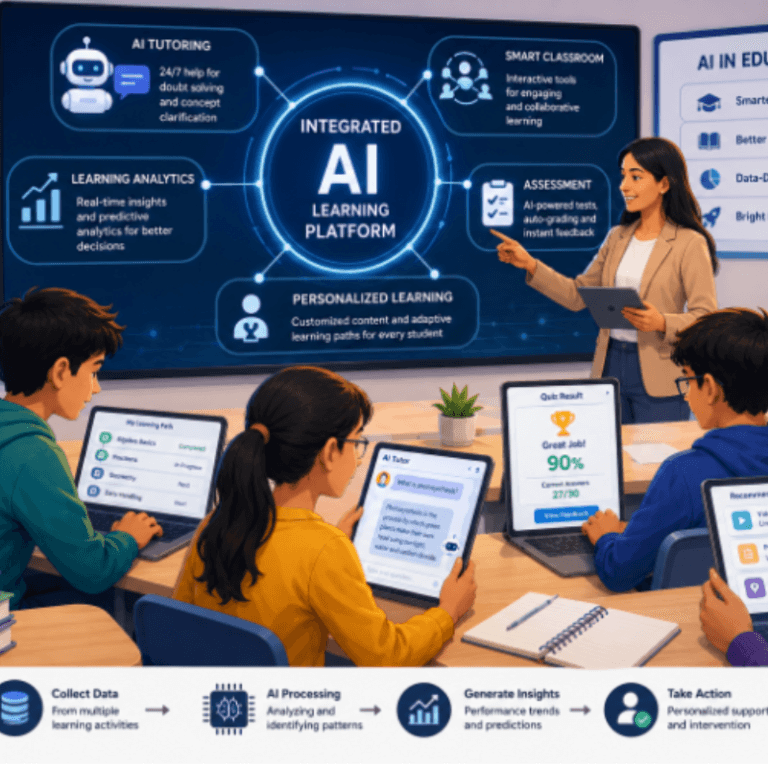
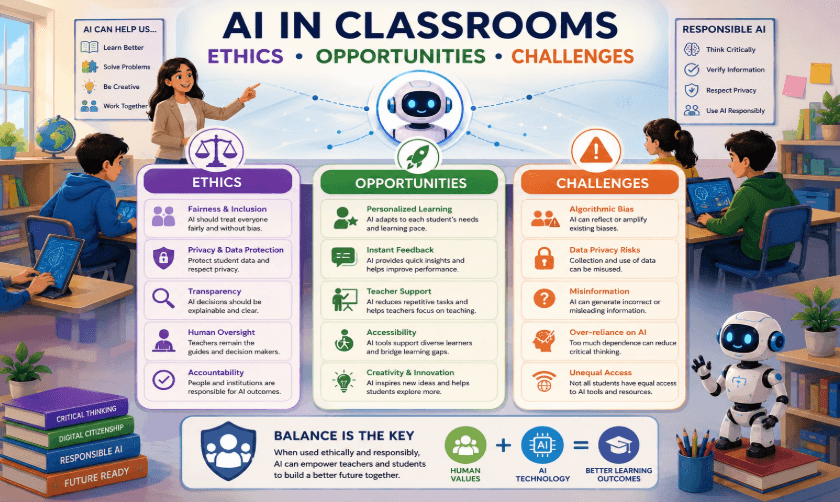
The integration of AI and robotics into education offers several opportunities, but it also presents significant challenges. AI-powered learning platforms can personalise lessons according to each student’s learning requirements. This helps teachers identify learning gaps more effectively. Robotics activities can increase student engagement by making learning concepts in science and mathematics more interactive and interesting.
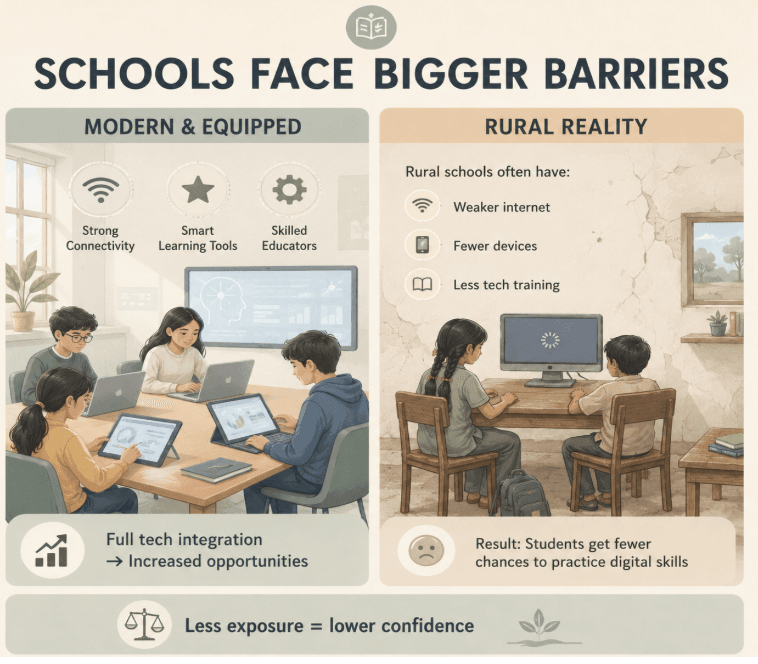
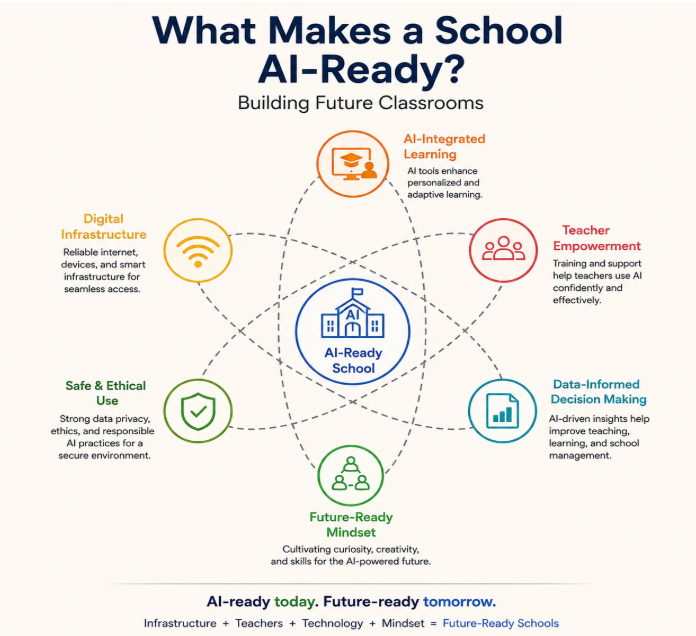
However, successful integration of AI in education and its benefits cannot be fully obtained unless issues of accessibility and equity are addressed. Many schools, most particularly in rural areas, continue to face internet-related challenges, digital infrastructure such as labs and smart boards, and access to modern learning resources. Teacher training is another crucial factor, as teachers need training for both theoretical and practical knowledge to successfully integrate AI into classrooms. Training large groups of teachers is a significant challenge ahead.
These challenges highlight the importance of a collaborative effort between the government and private educational companies, edtech organisations, and educational institutions to ensure that every student can equally access quality AI and robotics education.
The Road Ahead
The future of AI and Robotics education in India depends upon the successful and effective integration of technology into meaningful learning experiences. Rather than only focusing on software or devices, the focus should be on building a structured curriculum, structured learning hours, robust digital infrastructure, and easily accessible learning resources. Schools should also prioritise building curiosity, innovation, and responsible use of AI among students.
Robotics education complements AI by providing students with opportunities to apply theoretical concepts to real-life projects and by allowing them to participate in robotics competitions. With robotics, students develop engineering skills, teamwork, and creativity alongside technical knowledge. Together, AI and robotics create a learning environment that encourages innovation rather than only memorisation.
Investing in teacher training, expanding robotics laboratories, strengthening STEM education and encouraging AI literacy from an early age will play an important role in preparing students for future careers and required skills. At the same time, ethical considerations such as responsible AI use and data privacy should also be an important part of the curriculum.
As AI continues to evolve, education must remain adaptable, ensuring that students are prepared not only for today’s technologies but also for innovations in the near future. AI and robotics have the potential to enhance education by making learning more interactive, personalised and application-oriented. India has already laid a strong foundation through its policies and curriculum initiatives, but necessary investment in infrastructure, teacher training and equitable access will determine the success of this transformation.
The goal is not only to introduce new technologies into classrooms, but also to empower students with the confidence and competencies to solve real-world problems. By integrating AI and robotics education responsibly, India can equip students to contribute meaningfully to a progressive, intelligent and technology-led world
Categories
Recent Post